

 (317) 630-9060
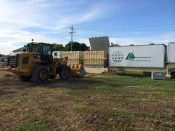
Mundell was retained to provide consulting services at a former electronics manufacturing facility in Seymour, Indiana which had been subject to several phase of environmental investigation. Mundell completed the treatment of 1,272 tons of cVOC-impacted soil during fifteen (15) days of operation using a thermal desorption process. The treatment was a success from both a cost and technical standpoint, achieving over 99% treatment effectiveness and saving our client up to $600,000 in hazardous material disposal fees……Read More »
Investigation and Remediation Portfolio
Source Removal Inside an Active Shopping Plaza – Indianapolis, Indiana
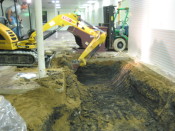
Mundell devised and executed a remediation work plan to remove impacted soil beneath a former dry cleaner and adjacent units in an active shopping center……Read More »
Source Removal in Residential Neighborhood

Mundell was contracted to remediate a former manufactured gas plant (MGP) located in a residential neighborhood in Franklin, IN. Following the house move, basement reconstruction, and excavation/disposal of approximately 12,271.41 tons of impacted soil, the site was fully restored. As part of the ongoing monitoring plan, a groundwater monitoring network has been sampled quarterly to verify the success of the removal action. The site is expected to receive full closure following eight quarters of post-remediation groundwater monitoring……Read More »
Brent Dayharsh Reports on Remediation Progress to Seymour Board of Works

On October 8th, Brent Dayharsh reported to the Seymour Board of Works, that remediation work continues on a property which previously Seymour Woolen Mill and later Seymour Electronics. After installing groundwater monitoring wells to delineate the extent of the contamination, Mundell determined the groundwater plume extends from the site on South Poplar Street to near…..Read More »
Fuel Oil Delineation and Site Closure at a Steam Generation Plant
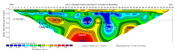
In 2006, Mundell was retained to provide consulting services at a Ball State University steam generation facility that had been the subject of environmental investigative activities since 1993 when it was discovered that that fuel oil had been released from an on-site underground storage tank. After historical review and site investigations, Mundell determined that: (1) groundwater impacts were limited in effect and distribution; (2) the vapor exposure pathway was incomplete, and; (3) SPH materials were effectively immobilized within a geologic formation beneath the site. Mundell then proposed a risk-based approach to achieve site closure without further monitoring or remediation, including the placement of an Environmental Restrictive Covenant (ERC) on the property that defined a specific zone of soil impacts, restricted uncontrolled groundwater use, and limited future usage of the property to non-residential purposes……Read More »
